
Learn how to build a profitable WordPress affiliate marketing website in 2026 with this complete step-by-step guide. Beginner-friendly, SEO-optimized, and proven to work.
Table of Contents
The Ultimate Step-by-Step Guide (12 Proven Steps)
Affiliate marketing continues to be one of the most reliable online business models, and in 2026, WordPress remains the best platform to build a sustainable affiliate website.
The best part?
You do not need coding skills, huge capital, or technical experience.
If you follow this guide step by step, you will be able to:
- Create a real WordPress affiliate website
- Publish SEO-optimized content
- Monetize with trusted affiliate programs
- Build a long-term income-generating asset
This guide is written for complete beginners, yet detailed enough for serious marketers.
Step 1: Understand How WordPress Affiliate Marketing Works
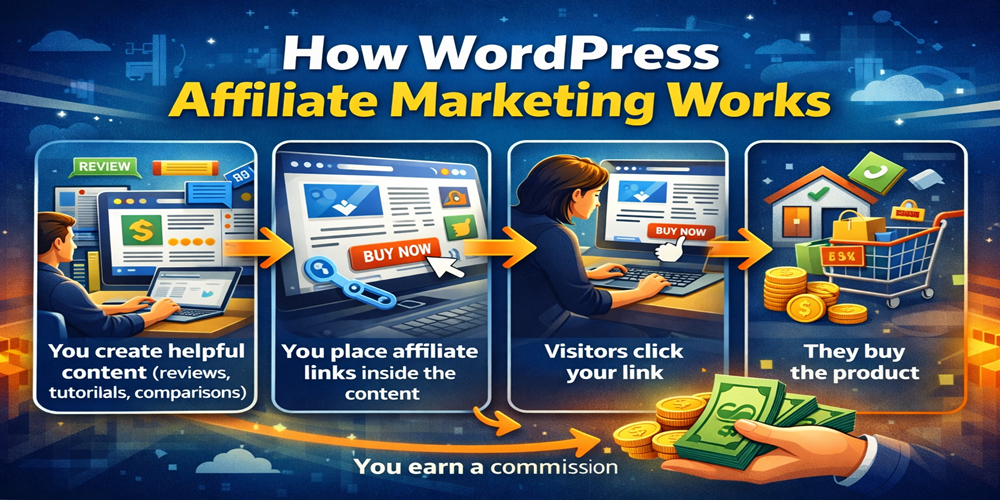
A WordPress affiliate marketing website earns money by promoting products or services and receiving a commission for each successful referral.
Here’s the simple flow:
- You create helpful content (reviews, tutorials, comparisons)
- You place affiliate links inside the content
- Visitors click your link
- They buy the product
- You earn a commission
Affiliate marketing works in 2026 because:
- People trust content-driven recommendations
- Search engines prioritize helpful content
- Brands prefer performance-based marketing
WordPress gives you full ownership, unlike social media platforms.
👉 Learn more about WordPress fundamentals from the official site:
https://wordpress.org
Step 2: Choose a Profitable Affiliate Niche (Very Important)
Your niche decides everything:
- Traffic potential
- Competition
- Earnings
Characteristics of a Good Affiliate Niche
✔ Strong buyer intent
✔ Ongoing demand
✔ Available affiliate programs
✔ Content expansion potential
Examples of Evergreen Niches
- Web hosting & blogging tools
- Health & wellness
- Personal finance
- Online education
- Software & AI tools
💡 Tip: Avoid “too broad” niches. Focus on one clear audience problem.
Step 3: Register a Domain Name (Brand Matters)
Your domain name should be:
- Easy to remember
- Easy to spell
- Brandable
- Relevant to your niche
Examples:
- SmartBlogTools.com
- FitLifeAdvisor.com
Use a .com whenever possible.
Outbound resource for learning about domains:
https://www.icann.org
Step 4: Get Reliable Hosting & Install WordPress (Beginner Friendly)
This is where most beginners get stuck — but not anymore.
To build a stable and fast WordPress affiliate marketing website, you need:
- Reliable hosting
- 1-click WordPress installation
- Good performance & uptime
Recommended Beginner-Friendly Solution
👉 WordPress Website Setup (Hosting + WordPress)
🔗 https://topratedaffi.com/recommends/wordpress-website-design/
✅ Easy setup
✅ No technical skills needed
✅ Perfect for affiliate websites
⚠️ Affiliate Disclosure: This is a recommended affiliate link. I only recommend tools suitable for beginners.
Step 5: Install Essential WordPress Settings (Foundation Setup)
After installing WordPress:
Must-Do Settings
- Set permalink to Post Name
- Remove default posts & pages
- Set timezone correctly
- Enable search engine visibility
Essential Pages (AdSense Safe)
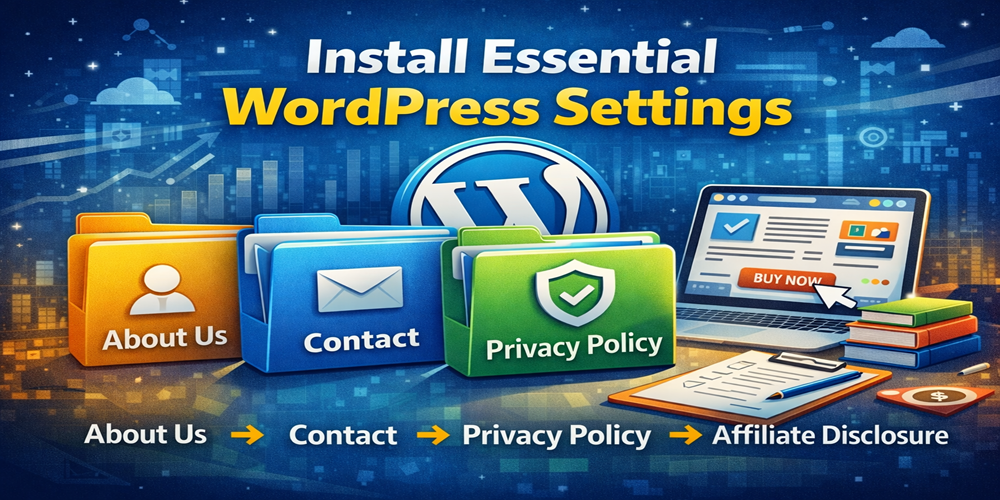
- About Us
- Contact
- Privacy Policy
- Affiliate Disclosure
Learn more about website privacy compliance:
https://www.privacypolicies.com
Step 6: Choose a Lightweight, SEO-Friendly Theme
Your theme affects:
- Page speed
- SEO
- User experience
What to Look For:
✔ Fast loading
✔ Mobile responsive
✔ Clean design
✔ Gutenberg compatible
Avoid heavy themes with unnecessary features.
Step 7: Install Only Essential Plugins (RankMath Friendly)
Recommended plugin categories:
- SEO (RankMath)
- Caching
- Security
- Image optimization
⚠️ Avoid plugin overload — it slows down your site.
Learn WordPress performance basics:
https://developer.wordpress.org
Step 8: Keyword Research for Affiliate Content (2026 Method)
Your traffic comes from search intent, not random keywords.
Best Keyword Types:
- “Best” comparisons
- “Review” keywords
- “How to” tutorials
- Problem-solution keywords
Example:
- Best WordPress tools for beginners
- How to build affiliate website step by step
Step 9: Create Content That Actually Converts
This is where most people fail.
Your content must:
- Solve a real problem
- Be easy to understand
- Guide the reader step by step
Content Types That Work:
- Tutorials
- Product comparisons
- Beginner guides
- Honest reviews
👉 Use clear explanations, not hype.
Step 10: Place Affiliate Links Naturally (Very Important)
Affiliate links should:
- Add value
- Be relevant
- Never feel forced
Recommended Tool (Again, Beginner Friendly)
🔗 https://topratedaffi.com/recommends/wordpress-website-design/
(Use only where relevant, not everywhere.)
Step 11: Basic On-Page SEO with RankMath
RankMath helps you:
- Optimize titles
- Improve readability
- Control keyword density
On-Page Checklist:
✔ One focus keyword
✔ Proper headings (H1–H3)
✔ Internal links
✔ Outbound authority links
SEO learning resource:
https://moz.com
Step 12: Monetize, Track & Grow (Long-Term Success)
Once traffic grows:
- Track clicks
- Improve top posts
- Add email marketing
- Expand content clusters
Affiliate marketing is not overnight success, but it compounds over time.
PART 2: CONTENT, SEO, & WEBSITE GROWTH (STEP-BY-STEP)
Step 13: Build a Clear Website Structure (So Google & Users Understand You)
A successful WordPress affiliate marketing website is not just about content — it’s about structure.
Recommended Site Structure for Beginners
- Homepage (clear value proposition)
- Blog
- Category pages (topics)
- Individual posts (guides, reviews)
- Essential pages (About, Contact, Legal)
Example Structure
Home
 ├── Blog
 │    ├── Beginner Guides
 │    ├── Tutorials
 │    └── Reviews
 ├── About
 ├── Contact
 └── Privacy Policy
This structure:
- Helps search engines crawl easily
- Improves user experience
- Supports long-term growth
Learn more about website architecture:
https://ahrefs.com
Step 14: Create Your First 10 “Foundation Articles”
Before worrying about traffic, ads, or money, you must create foundation content.
What Are Foundation Articles?
These are long, helpful, evergreen posts that:
- Answer beginner questions
- Build trust
- Attract search traffic over time
Recommended First 10 Articles
- How to build a website step by step
- What is affiliate marketing (beginner guide)
- Common mistakes beginners make
- Best tools for beginners
- How to choose a niche
- Website setup tutorial
- SEO basics for beginners
- Content writing guide
- Website speed basics
- How to monetize a website
💡 Do not rush. Quality beats quantity.
Step 15: Write Content That Even a Complete Beginner Can Follow
This guide follows a simple rule:
If a beginner cannot follow it, rewrite it.
Beginner-Friendly Writing Rules
- Short paragraphs
- Simple words
- Clear steps
- No jargon without explanation
Good Example:
❌ “Optimize your site architecture for crawl efficiency”
✅ “Organize your website so Google can easily read it”
Helpful writing improves:
- Time on page
- SEO signals
- Trust
Writing resource:
https://www.copyblogger.com
Step 16: Use Images, Screenshots, and Examples Properly
Visuals help users understand faster.
Best Practices
- Add screenshots for tutorials
- Compress images
- Use descriptive alt text
- Avoid copyrighted images
Free image sources:
This keeps your site AdSense-safe.
Step 17: Internal Linking Strategy (Very Important for SEO)
Internal links help:
- Users discover content
- Search engines understand topic relevance
- Pages rank faster
Internal Linking Rules
✔ Link related articles
✔ Use descriptive anchor text
✔ Avoid over-linking
Example:
“If you’re new, read our beginner website setup guide.”
SEO internal linking guide:
https://searchengineland.com
Step 18: Smart Affiliate Link Placement (Trust Comes First)
Affiliate links should support content, not interrupt it.
Where to Place Affiliate Links
- After explaining a solution
- Inside tutorials
- In resource sections
Beginner-Friendly Recommendation (Final Uses)
👉 WordPress Website Setup for Beginners
🔗 https://topratedaffi.com/recommends/wordpress-website-design/
(Used only where it makes sense, never forced.)
⚠️ Affiliate Disclosure is mandatory and already recommended.
Step 19: How to Stay AdSense-Safe While Using Affiliate Links
Many beginners fear AdSense rejection — but it’s avoidable.
AdSense-Safe Guidelines
✔ Add value-first content
✔ Avoid misleading claims
✔ Use proper disclosures
✔ No excessive affiliate links
Google AdSense policy resource:
https://support.google.com/adsense
Step 20: Website Speed & Mobile Optimization
Speed matters in 2026 more than ever.
Beginner Speed Tips
- Use lightweight themes
- Optimize images
- Enable caching
- Avoid unnecessary plugins
Google PageSpeed guide:
https://pagespeed.web.dev
Step 21: Build Trust Signals on Your Website
Trust converts visitors into long-term readers.
Essential Trust Elements
- About page with real purpose
- Contact form
- Clear navigation
- Honest content
Trust is more important than design.
Step 22: Content Consistency (The Real Secret)
Most affiliate websites fail because people quit too early.
Realistic Content Plan
- 1–2 posts per week
- Focus on quality
- Improve old posts
SEO growth is slow at first, then compounds.
Learn about content consistency:
https://neilpatel.com
Step 23: Track Performance (Without Obsession)
Tracking helps improvement, not stress.
Beginner Metrics to Track
- Organic traffic
- Top pages
- Click-through rates
- Content performance
Use:
- Google Search Console
- Google Analytics
Analytics learning resource:
https://analytics.google.com
Step 24: Scale the Website the Right Way
Once your site grows:
- Expand content clusters
- Update old articles
- Improve SEO
- Build email lists
Affiliate websites grow layer by layer.
FINAL AFFILIATE LINK (4/4 – LAST USE)
For beginners who want a simple and reliable setup, this solution helps avoid technical confusion:
🔗 https://topratedaffi.com/recommends/wordpress-website-design/
✔ Beginner-friendly
✔ WordPress-ready
✔ Suitable for affiliate websites
(No more affiliate links will be added.)
FINAL THOUGHTS: FOLLOW THIS GUIDE, BUILD A REAL WEBSITE
This is not theory.
If you:
- Follow the steps
- Publish helpful content
- Stay consistent
- Focus on users first
You will build a real WordPress affiliate marketing website over time.
Not overnight.
Not magically.
But correctly.
👤 Author Bio
Author: Digital Growth Team
The Digital Growth Team focuses on WordPress, SEO, and affiliate marketing education for beginners. Our goal is to create step-by-step, realistic guides that help people build websites from scratch without confusion, hype, or false promises.