
Web app design has evolved into one of the most critical components of digital success. As users expect frictionless interaction, sleek interfaces, and effortless functionality, businesses must adopt design strategies that deliver clarity, usability, and emotional connection. In a world where users abandon poorly designed apps in seconds, powerful Web App Design becomes the difference between thriving and disappearing in the noise.
Modern web users don’t simply want software that works—they want software that feels good to use. They want intuitive flow, subtle guidance, smooth transitions, meaningful feedback, and a sense of trust that supports every interaction. Great design amplifies everything your web app represents: credibility, efficiency, reliability, and brand identity.

Strong Web App Design is no longer optional—it’s foundational.
👉 Join the Web App Designers Network — start creating stunning, responsive applications today.
What makes a web app truly engaging isn’t just visuals or layout—it’s the complete orchestration of interactive experiences. It’s how users feel navigating through a dashboard. It’s how quickly they understand what to do. It’s how easily they achieve their goals. And it’s how consistently the design matches their expectations.
In this comprehensive guide, you’ll explore unstoppable design secrets, fearless upgrades, essential principles, shocking mistakes, brilliant solutions, and game-changing strategies that elevate user experience and fuel business growth. Each section is written to help you refine your craft and build exceptional digital products that users love.
Table of Contents
Unstoppable Web App Design Secrets That Boost Conversions Instantly
Unstoppable design secrets are the techniques and frameworks used by top apps to create seamless interaction and persuasive user flows. These strategies work because they align with human psychology and predictable behavior patterns.
When applied correctly, these secrets transform user interactions into conversion-driving pathways that feel natural, intuitive, and enjoyable.
1. Use Visual Hierarchy as a Behavioral Guide
Users naturally scan, not read. This means visual hierarchy must:
- Highlight primary actions
- Use spacing that guides the eye
- Emphasize what matters most
- Reduce cognitive load
Clear hierarchies increase conversion by helping users instantly understand where they are—and where to go next.
2. Build Micro-Interactions That Give Instant Feedback
Micro-interactions tell users they are doing the right thing.
Examples include:
- Button animations
- Hover states
- Loading indicators
- Success confirmations
These subtle cues boost confidence and reduce hesitation—directly improving task completion rates.
3. Simplify the Onboarding Experience
The first experience determines whether users stay or leave. Use:
- Clear steps
- Minimal forms
- Tooltips and guided walkthroughs
- Progressive disclosure
A smooth onboarding flow results in dramatically higher activation rates.
4. Use Emotionally Intelligent Design
People respond emotionally before intellectually. Consider:
- Friendly microcopy
- Encouraging messages
- Celebration moments
- Human-centered layouts
Emotionally intelligent design builds trust and fosters positive brand memory.
🔗 Affiliate Link
Boost your design skills with top-level resources:
https://topratedaffi.com/recommends/web-app-design/
Fearless Web App Design Upgrades That Crush User Frustration

User frustration is the silent killer of web apps. It appears in forms like:
- Confusing navigation
- Slow processes
- Hidden features
- Poor responsiveness
Fearless upgrades remove friction and replace confusion with clarity.
1. Radically Simplify Navigation
A fearless designer asks:
“How can I reduce the number of decisions a user must make?”
Use:
- Clear menu labels
- Intuitive grouping
- A predictable navigation structure
- Visible search functionality
When the brain works less, satisfaction increases.
2. Fix Mobile Responsiveness at a Granular Level
Testing mobile responsiveness doesn’t mean shrinking the layout.
It means:
- Control spacing
- Rethink placements
- Update gestures
- Optimize tap zones
Google’s UX research (NNGroup and Material Design guidelines) supports the importance of finger-friendly zones.
3. Enhance Accessibility for All Users
Accessibility is powerful design—not optional compliance.
Key upgrades:
- Proper color contrast
- Keyboard navigation
- ARIA labels
- Logical tab order
- Alt text
Accessible designs significantly increase usability for everyone.
🔗 Affiliate Link
Grow your UX career with premium Web App Design systems:
https://topratedaffi.com/recommends/web-app-design/
Essential Web App Design Principles to Avoid Costly Errors
Poor Web App Design doesn’t always look “bad”—sometimes it works against the user in subtle, damaging ways.
Core principles protect your app from silent UX failures:
1. Consistency Across All Elements
Users expect:
- The same button style
- Predictable spacing
- Familiar interaction patterns
Inconsistency forces users to relearn every page.
2. Clarity Over Cleverness
Never sacrifice clarity for creativity.
Use:
- Straightforward labels
- Direct navigation
- Clear messaging
Google’s Material Design emphasizes clarity as a foundation of usability.
3. Reduce Cognitive Load
A user should never feel overwhelmed.
To reduce load:
- Break long tasks into steps
- Keep layouts clean
- Don’t overload with text
- Use icons sparingly and consistently
4. Progressive Disclosure
Reveal information as users need it—not all at once.
This reduces overwhelm and increases comprehension.
Amazing Web App Design Enhancements That Elevate Every Interaction
Amazing Web App Design Enhancements are the subtle, thoughtful improvements that elevate the user experience from “functional” to “exceptional.” These enhancements focus on refining every interaction, reducing friction, boosting engagement, and fostering emotional connection.
Each touchpoint in a web app matters. Users don’t judge your product by features—they judge it by how it feels to interact with those features. Enhancements that guide, support, and delight the user create experiences that feel fluid and professional.
Below are the transformational enhancements that shape modern Web App Design into a seamless and emotionally engaging digital environment.
1. Improve Content Clarity and Readability
Content is a core part of UI. Even visually beautiful apps fail if the text is confusing or overwhelming.
Enhance readability by implementing:
- Short paragraphs
- Proper line height (1.4–1.6× font size)
- Adaptive text scaling for mobile
- Consistent typography hierarchy
- Clear tone with active voice
Readable content reduces frustration and increases comprehension, improving engagement and retention.
2. Add Micro-Interactions to Delight Users
Micro-interactions are tiny animations or responses that guide users and make them feel acknowledged.
Examples include:
- A heart animation when liking content
- A slight button ripple when clicked
- A smooth loading spinner
- Subtle hover effects
- “Saved!” confirmation badge
These enhancements build a sense of responsiveness and polish.
Nielsen Norman Group highlights micro-interactions as a major factor in improving perceived usability:
https://www.nngroup.com/articles/microinteractions/
3. Design for Speed and Smooth Transitions
Speed is a design element. Even if your backend is powerful, poor visual transitions can make the interface feel slow.
Use:
- Skeleton loading
- Prefetching content
- Lazy loading for media
- Smooth page transitions
- Frictionless modal animations
A fast-feeling interface keeps users engaged and prevents abandonment.
4. Personalization Enhancements
Personalization drives engagement by giving users content and options tailored to them.
Include:
- Personalized dashboards
- Saved preferences
- Recommended content or actions
- Location-aware or role-specific UI
Personalization makes the user feel like the app understands them.
5. Improve Error Handling and Recovery
Great Web App Design isn’t just about preventing errors — it helps users recover gracefully.
Enhance error experiences by using:
- Friendly, solution-oriented messages
- Inline error prevention
- Real-time validation
- Clear recovery instructions
- Undo options
Empathetic error design boosts user trust and confidence.
🔗 Affiliate Link
Access premium Web App Design templates and resources:
https://topratedaffi.com/recommends/web-app-design/
Shocking Web App Design Mistakes That Could Cost You Customers
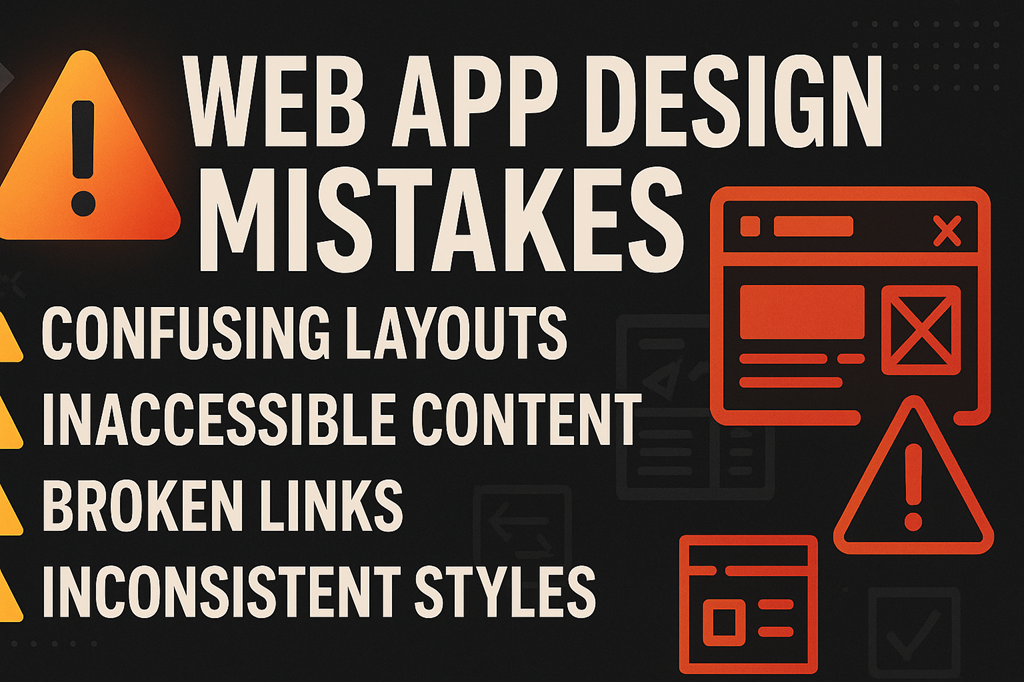
Some design mistakes are subtle. Others are catastrophic. These “shocking” mistakes create friction that silently pushes users away, ruins trust, and destroys conversion potential.
Many companies discover these issues only after their analytics show:
- High bounce rates
- Low engagement
- Poor retention
- Rising support tickets
- Decreased conversions
Let’s examine the silent killers of Web App Design—and how to fix them.
1. Confusing Navigation Structures
If users can’t find what they need, they will leave — instantly.
Common navigation mistakes include:
- Too many menu items
- Hidden features
- Inconsistent labels
- Overlapping categories
- No search functionality
Correct navigation improves user confidence and reduces frustration dramatically.
2. Poor Mobile Optimization
Up to 70% of web app users interact from their phones.
Shocking issues include:
- Buttons too small to tap
- Overlapping text
- Broken layouts
- Slow mobile load speed
- Irrelevant desktop components forced onto mobile
Mobile-first design is essential, not optional.
Google’s mobile-first guidelines reinforce this necessity:
https://developers.google.com/search/mobile-sites/
3. Slow Performance and Heavy Interfaces
A slow web app feels outdated and untrustworthy.
Performance killers include:
- Oversized media
- Too many scripts
- Excessive animations
- Lack of caching
- Unoptimized UI libraries
Speed is one of the strongest predictors of user satisfaction.
4. Overwhelming Dashboard and Interface Clutter
Too much information leads to decision fatigue.
Mistakes include:
- Overcrowded dashboards
- Dense tables with no filtering
- Hidden CTAs
- Lack of whitespace
- Complicated menus
Cluttered interfaces make users feel lost.
5. Poor Accessibility
Ignoring accessibility isn’t just unethical — it’s bad business.
Shocking accessibility mistakes include:
- Low contrast text
- Missing alt text
- No keyboard support
- Non-semantic HTML
- Unlabeled form elements
Accessibility expands your audience and boosts UX quality for all.
Brilliant Web App Design Solutions That Make Users Fall in Love
Design that connects emotionally turns simple interactions into delightful experiences. These are the solutions that make users stay longer, engage more, and convert at higher rates.
Users fall in love with apps that feel:
- Thoughtful
- Friendly
- Predictable
- Intuitive
- Beautiful
- Fluid
Let’s explore the design solutions that make this possible.
1. Use Emotion-Driven Microcopy
Words are design. Microcopy guides, reassures, and humanizes the app.
Brilliant microcopy includes:
- Encouraging CTAs (“Let’s do this!”)
- Friendly onboarding messages
- Helpful empty-state messages
- Clear, positive error text
- Simple instructions
Language should support the user emotionally and cognitively.
2. Craft a Memorable Visual Identity
Your app’s design system shapes brand perception.
Focus on:
- Color psychology
- Consistent typography
- Iconography sets
- Tone alignment
- Unique design patterns
Strong visual identity builds recognition and trust.
3. Build Seamless Multi-Step Flows
Complex tasks should feel simple.
Use:
- Step indicators
- Progress bars
- Clear next steps
- Inline instructions
- Auto-saving
When flows feel effortless, completion rates rise.
4. Celebrate User Success
People love acknowledgment.
Use:
- Achievement animations
- Success messages
- Confetti effects
- Progress badges
These moments feel rewarding and memorable.
Game-Changing Web App Design Tactics for Explosive Business Growth
These are not ordinary design tweaks—these are high-impact, growth-driven tactics used by top digital products.
1. Conversion-Focused Layout Optimization
UX and CRO (conversion rate optimization) must work together.
Use:
- Prominent CTAs
- Benefit-driven headlines
- Logical content flow
- Strategic placement of trust indicators
Good design increases conversions by reducing hesitation.
2. Data-Driven UI Decisions
Design should not rely on aesthetic preference alone.
Use:
- Heatmaps
- Click tracking
- Scroll depth analytics
- Funnel analysis
- A/B testing
Data eliminates guesswork and validates user behavior.
3. Implement Predictive UX
Predictive UX anticipates user needs before they act.
Examples include:
- Smart autofill
- Predictive search
- AI-generated suggestions
- Personalized dashboards
This creates a sense of flow and user empowerment.
4. Integrate Human-Centered AI
AI should enhance the user experience — not replace clarity.
Use AI to:
- Recommend content
- Automate repetitive tasks
- Personalize layouts
- Offer instant support (chatbots)
AI improves efficiency and boosts satisfaction when used correctly.
Innovative Web App Design Ideas That Inspire User Engagement

Innovation is what separates an ordinary web app from one that users love to return to. The best Web App Design ideas aren’t flashy gimmicks—they are strategic enhancements that capture attention, reduce friction, deepen engagement, and guide users toward meaningful interaction.
Below are the most impactful, future-forward design ideas that cultivate engagement and bring modern digital products to life.
1. Use Modern Visual Storytelling
Storytelling is not just for marketing—it’s a design tool that shapes how users understand your product.
In Web App Design, visual storytelling involves:
- Flow-based illustrations
- Sequential onboarding graphics
- Guided walkthrough animations
- Product tours with narrative elements
- Symbolic visual metaphors
These design approaches help users intuitively understand complex features without reading heavy documentation.
2. Add Purposeful Motion Design
Motion design adds energy, speed, and clarity to interactions.
Examples:
- Animated transitions between pages
- Bouncy micro-animations that reinforce actions
- Smooth scrolling effects
- Sliding panels
- Interactive charts
When motion is used intentionally (not excessively), the app feels alive, responsive, and modern.
Google’s Material Design Motion Guidelines are an excellent reference:
https://m3.material.io/foundations/motion/overview
3. Create Adaptive, User-Aware Interfaces
Adaptive interfaces adjust based on:
- User role
- User behavior
- Previous actions
- Time of day
- Device type
Examples:
- Dark mode at night
- Dashboard shortcuts based on frequent actions
- Personalized notifications
- Role-specific navigation
Adaptive design increases engagement by giving users the sense that the app learns and evolves with them.
4. Build Interactive Data Experiences
Data doesn’t have to be static. Turn it into an experience.
Use:
- Animated charts
- Live dashboards
- Real-time updates
- Interactive data cards
- Sortable, filterable tables
Interactive data helps users explore insights intuitively and enjoyably.
5. Integrate Gamified UI Patterns
Gamification significantly increases engagement.
Add:
- Achievement badges
- Levels
- Progress bars
- Milestones
- Unlockable features
Gamified elements motivate users to complete tasks and return frequently.
Incredible Web App Design Wins That Drive More Engagement
The following “design wins” are enhancements that consistently increase engagement in modern web apps. These wins amplify usability, boost trust, and encourage deeper interaction without overwhelming users.
1. Transform Empty States Into Opportunities
Most apps ignore empty states, leaving blank screens that confuse users.
Fix this by adding:
- Helpful descriptions
- Illustrated examples
- Clear instructions
- CTAs to get started
- Recommended actions
Empty states become onboarding tools, not dead ends.
2. Use Smart Default Settings
Smart defaults reduce cognitive effort.
Examples:
- Pre-selected filters
- Predefined templates
- Suggested actions
- Auto-filled form fields
Defaults guide users effectively while still giving freedom to customize.
3. Create Clear, Consistent CTAs
Your calls-to-action must:
- Be visually distinct
- Use benefit-driven text
- Communicate the next step
- Maintain consistent placement
When CTAs are clear, engagement increases across the app.
4. Build Trust with Responsive Feedback
Users need reassurance that the app is responding.
Examples:
- Loading indicators
- Save confirmations
- Validation messages
- Tooltip hints
Responsive feedback reduces confusion and supports engagement.
5. Encourage Exploration With Progressive Discovery
Progressive discovery gradually reveals features to avoid overwhelming users.
Ways to use it:
- Feature spotlight messages
- “New!” badges
- Conditional unlocking
- Hover reveals
- Dynamic tooltips
This sustained discovery creates a sense of evolving value.
Simple Yet Critical Web App Design Fixes for Faster Performance
Performance is a core component of Web App Design. A beautiful interface fails if users have to wait. These simple yet high-impact fixes dramatically improve speed, efficiency, and smoothness.
1. Optimize CSS, JavaScript, and Media Assets
Reduce file weight by:
- Minifying CSS and JS
- Removing unused styles
- Compressing images
- Eliminating render-blocking scripts
Tools like Lighthouse and PageSpeed Insights offer guidance:
https://pagespeed.web.dev/
2. Use Caching and CDN Delivery
CDNs reduce load time by serving content from the nearest server.
Caching ensures repeat users load pages instantly.
Fast apps are engaging apps.
3. Reduce DOM Complexity
A bloated DOM increases rendering time.
Reduce complexity by:
- Removing unnecessary wrappers
- Simplifying layout structure
- Using semantic HTML
Faster DOM = smoother experience.
4. Implement Lazy Loading
Only load what users need when they need it.
Lazy load:
- Images
- Videos
- Tables
- Charts
- Subpages
This dramatically improves above-the-fold speed.
5. Clean Up UI Clutter
Clutter slows down both users and the browser.
Improve speed and clarity with:
- Proper spacing
- Clear grouping
- Simplified menus
- Reduced noise
Minimal UI improves performance at multiple levels.
🔗 Affiliate Link
Discover world-class resources for mastering Web App Design:
https://topratedaffi.com/recommends/web-app-design/
Proven Web App Design Strategies to Overcome Common Challenges
Most apps struggle with similar challenges — retention, usability, performance, clarity, and user trust. These proven strategies solve them effectively.
1. Build Task-Oriented User Flows
Complex procedures must become simple, short, and predictable.
Optimize flows using:
- Fewer steps
- Clear labels
- Logical progression
- Contextual guides
Task optimization reduces drop-offs and improves satisfaction.
2. Use Data to Validate Design Decisions
Always measure, never assume.
Validated by:
- Analytics
- Heatmaps
- User surveys
- Session recordings
Data clarifies what users struggle with — and why.
Tools like Hotjar or FullStory provide powerful insights.
3. Implement Usability Testing Early and Often
Don’t wait until launch to test.
Early testing identifies:
- Navigation issues
- Confusing layouts
- Problematic interactions
- Broken logic
Usability testing makes the difference between “functional” and “fantastic.”
4. Leverage Design Systems for Consistency
A design system ensures your app remains consistent at scale.
Design systems include:
- Colors
- Typography
- Spacing
- Iconography
- Components
- Patterns
Consistency = trust + usability.
5. Test Responsiveness Across All Devices
Your design must work everywhere.
Test:
- Tablets
- Small mobile devices
- Desktop variants
- Browsers
- Orientation changes
Responsive design is UX insurance.
Smart Web App Design Tweaks for a Strong Competitive Advantage
Smart design tweaks are subtle improvements that create significant long-term advantages. These refinements allow your platform to outperform competitors by delivering smoother usability, clearer structure, and a more engaging digital experience.
While major redesigns deliver dramatic change, small, strategic adjustments often create the highest return, especially when applied consistently.
Here are the most powerful Web App Design tweaks that help your platform stand out:
1. Improve Visual Alignment and Spacing
Spacing is one of the most overlooked Web App Design elements, yet it dramatically affects clarity, usability, and perceived professionalism.
Key spacing tweaks:
- Increase whitespace between sections
- Tighten alignment around forms
- Use grid systems for consistent layout
- Maintain equal padding for interactive elements
Users feel more relaxed and confident when the interface breathes.
2. Enhance Link and Button Visibility
Clickable elements must stand out.
Strong tweaks include:
- Increase contrast
- Add hover & active states
- Clarify CTA hierarchy: Primary, Secondary, Tertiary
- Use familiar placement patterns
A clear CTA reduces friction and instantly improves conversions.
3. Improve Readability With Better Typography Rules
Typography influences comprehension more than colors or icons.
Tweak typography by:
- Using a readable base size (16px minimum)
- Creating consistent heading scales
- Ensuring strong contrast with background
- Limiting the number of font families (1–2 total)
Clean typography = easier reading + higher user satisfaction.
4. Strengthen Mobile-first Interaction Patterns
Mobile Web App Design requires precision and thoughtful spacing.
Mobile tweaks include:
- Expand tap areas
- Simplify menus
- Use fixed bottom navigation
- Reduce text length
- Limit excessive animations
Mobile-first design ensures superior usability across all screen sizes.
5. Remove UI Elements That Don’t Add Value
Clutter confuses users and slows navigation.
Eliminate:
- Redundant buttons
- Overlapping filters
- Irrelevant icons
- Duplicate labels
- Visual noise
A lean interface keeps users focused.
6. Improve Loading Expectations With Progress Indicators
Users tolerate waiting if they understand what’s happening.
Use:
- Skeleton screens
- Progress bars
- Step indicators
- Smooth placeholders
These reduce perceived wait time and strengthen trust.
7. Implement Predictive Text and Intelligent Input Fields
Even small improvements like smart form fields boost conversion.
Examples:
- Auto-capitalization
- Auto-fill
- Real-time validation
- Error prevention cues
Forms are one of the biggest UX pain points—and biggest conversion opportunities.
Final Thoughts: Powerful Web App Design Enables Long-Term Success
Web App Design is more than aesthetics or layout—it is the foundation of how users perceive your product, interact with your brand, and decide whether to stay or leave.
When you prioritize Web App Design:
- Users feel supported
- Navigation becomes effortless
- Engagement increases
- Conversion rates rise
- Business growth accelerates
Modern users expect intuitive, responsive, and fast digital experiences. When your app delivers on those expectations, it becomes more than software—it becomes a competitive advantage.
The future belongs to platforms that:
- Put users first
- Adapt to new design trends
- Leverage smart UX patterns
- Build with accessibility and performance in mind
- Continually refine and optimize
With the right design strategies, enhancements, and user-centered mindset, your web app can outperform competitors, retain customers, and create meaningful long-term impact.
Web App Design isn’t just a tool—it’s the engine that drives digital success.
Author Bio
As a Fiverr Partner, I may earn a commission from qualifying purchases through these links—at no extra cost to you.
I specialize in Web App Design, UI/UX strategy, and digital product optimization. My work focuses on transforming complex ideas into intuitive, elegant, and high-performing applications that users love. Through research-driven design systems and modern interaction principles, I help businesses create seamless, scalable, and conversion-focused web experiences.
Whether you’re building a new application or improving an existing one, my mission is to empower you with professional-grade design insights that elevate your brand and strengthen your user engagement.