
In today’s mobile-first world, users expect digital experiences that are fast, intuitive, and instantly accessible. While websites play a vital role in branding and information delivery, they often fall short when it comes to engaging users on mobile devices. Slow loading, browser limitations, and inconsistent layouts can make even the best website feel outdated and inconvenient on a phone.
This is where the decision to convert website to app becomes a transformative advantage.
A mobile application gives your audience a smoother, faster, and more personalized way to interact with your brand. With features like offline access, push notifications, touch-friendly navigation, and a polished interface designed specifically for small screens, your platform becomes more convenient and more compelling. Apps also strengthen visibility, increase retention, and position your business as a forward-thinking leader in your industry.
This long-form guide reveals 12 effective strategies to help you convert your website into a high-performance app that enhances user experience, boosts loyalty, and drives long-term growth.
Table of Contents
⭐ Strategy 1: Analyze Your Website’s Current Structure and User Behavior
Before you convert website to app, you must understand what users currently do on your site—and what frustrates them. Websites often contain unnecessary sections, outdated content patterns, and complex navigation that won’t translate well into a mobile environment.
Key steps in this analysis:
- Review traffic data to identify your most visited pages
- Examine user flow patterns to see where users drop off
- Analyze bounce rates and slow-loading pages
- Identify top-performing actions such as sign-ups, purchases, or downloads
- Interview real users for qualitative insights
Tools like Google Analytics, Hotjar, and industry-standard research from Nielsen Norman Group (https://www.nngroup.com/) can provide valuable clarity.
By studying user behavior across your existing website, you gain a clear vision of what your app must prioritize and what can be simplified or removed entirely.
⭐ Strategy 2: Choose the Right App Type—Native, Hybrid, or Progressive Web App (PWA)
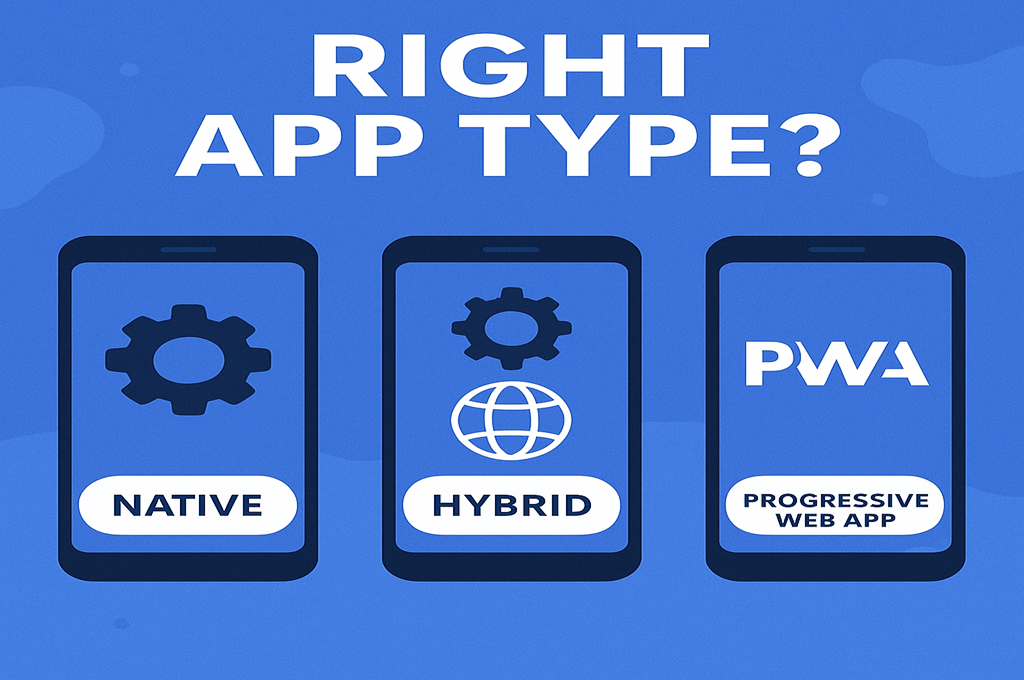
Your choice of app type determines your development workflow, performance level, and long-term scalability. Although all three app models have advantages, the best choice depends on your goals, budget, and user expectations.
Here’s a breakdown:
1️⃣ Native Apps (Android & iOS)
- Highest performance, best speed
- Access to full device features
- Published in Google Play & Apple App Store
- Best for brands seeking premium, long-term digital presence
2️⃣ Hybrid Apps
- One codebase for multiple platforms
- Faster and more cost-effective
- Suitable for content-based and service-based apps
3️⃣ Progressive Web Apps (PWA)
- Installable from a browser
- Faster to build
- Works offline and offers app-like experience
- Great for businesses wanting a lightweight solution
Industry leaders like Google Developers and Microsoft (https://www.microsoft.com/en-us/ai) highlight hybrid and PWA technologies as powerful, cost-effective alternatives to traditional app development.
⭐ Affiliate Link
If you want a simplified, beginner-friendly approach, explore this tool to convert website to app with ease:
👉 https://topratedaffi.com/recommends/convert-your-website/
⭐ Strategy 3: Redesign Your Website Layout for a Mobile-First App Interface
One of the biggest mistakes businesses make when converting a website into a mobile app is copying the website layout exactly as it is. Apps require a different structure—cleaner, more focused, and optimized for touch interactions.
Mobile screens are smaller, users expect simplicity, and app navigation must feel instinctive.
Key redesign considerations:
- Reduce clutter and prioritize essential elements
- Replace browser-style menus with a bottom navigation bar
- Use thumb-friendly button placement
- Increase font sizes and tap targets
- Improve spacing to avoid accidental taps
Mobile UI/UX principles recommended by Nielsen Norman Group emphasize simplifying choices and minimizing cognitive load. When your layout is redesigned to match app expectations, users immediately feel more comfortable—and more likely to return.
⭐ Strategy 4: Integrate Push Notifications to Increase Engagement
One of the most powerful advantages of converting a website to an app is the ability to use push notifications. These real-time alerts help businesses communicate directly with users—something websites cannot achieve effectively.
Push notifications allow you to:
- Deliver instant updates
- Share promotions
- Remind users about abandoned carts
- Notify about new content or features
- Encourage re-engagement
According to studies by McKinsey Digital, personalized push notifications significantly increase return visits and overall engagement.
When used correctly, notifications create a direct relationship between your brand and your audience—leading to stronger loyalty and higher retention.
⭐ Strategy 5: Optimize App Speed, Security, and Performance

Users expect apps to load instantly, respond quickly, and remain stable across a wide range of devices. This means your app must be optimized beyond the limitations of your website.
Key optimization steps include:
- Compress images and media for faster loading
- Improve API response times
- Minimize JavaScript and unnecessary code
- Enable caching for offline use
- Protect data with secure protocols
- Regularly test on multiple network conditions
Research from Google Cloud (https://cloud.google.com/) confirms that a delay as small as 1 second can reduce conversions and overall user satisfaction. High performance is not optional—it’s essential.
⭐ Affiliate Link
Explore this beginner-friendly platform that helps you convert website to app with fast, optimized performance:
👉 https://topratedaffi.com/recommends/convert-your-website/
⭐ Strategy 6: Implement Secure User Authentication and Data Protection
Security is one of the most important elements when you convert website to app. Users expect apps to provide stronger protection, faster login options, and safer data handling than standard websites. Failing to implement robust authentication can harm trust and lead to retention issues.
🔐 Key app security enhancements include:
- Encrypted data transmission (HTTPS/TLS)
- Token-based authentication (JWT, OAuth)
- Biometric login (Face ID, Touch ID)
- Multi-factor authentication
- Encrypted local storage
- Automatic logout for inactive sessions
Tech leaders like IBM AI Security (https://www.ibm.com/artificial-intelligence) emphasize that modern applications must adopt layered security models to protect users from evolving threats.
Why this matters:
Apps often store sensitive data locally to improve speed and convenience. Without proper encryption, that data becomes vulnerable. Enhancing security during the conversion process ensures your app builds trust from the start.
⭐ Strategy 7: Add Offline Functionality to Improve User Convenience
One of the biggest advantages apps have over websites is the ability to function without internet access. Even limited offline capability massively improves usability—especially for users in areas with inconsistent network coverage.
Offline features may include:
- Cached pages
- Saved user preferences
- Local content storage
- Offline browsing modes
- Delayed actions that sync when connection returns
Research by Google Developers shows that apps with offline capability achieve significantly higher retention rates because they eliminate friction and give users continuous access.
Why this matters:
Your users shouldn’t feel stuck or frustrated just because their connection dips. Offline access transforms your mobile app from a convenience into a dependable tool.
⭐ Strategy 8: Streamline Navigation for a Smoother App Experience
App navigation must feel natural and predictable. Mobile users interact through gestures, taps, and swipes—not clicks and browser tabs—so your app must embrace a navigation structure that feels genuinely mobile-first.
Effective navigation patterns include:
- Bottom navigation bar
- Slide-out side menu
- Floating action button (FAB)
- Tab-based switching
- Clean breadcrumbs for deeper paths
Additional optimization techniques:
- Reduce steps in key user journeys
- Use icons that match UI standards
- Keep labels short and intuitive
- Avoid overcrowding menus
According to usability research from Nielsen Norman Group, simplified navigation significantly improves user satisfaction and decreases early abandonment.
⭐ Affiliate Link
Want an easier way to convert website to app with optimized navigation templates?
👉 https://topratedaffi.com/recommends/convert-your-website/
⭐ Strategy 9: Ensure App Store Compliance to Avoid Rejections
When you convert website to app, one of the most overlooked challenges is meeting Google Play and Apple App Store guidelines. Apps are frequently rejected for issues that could have been avoided with proper preparation.
Common rejection triggers:
- Low-quality or missing screenshots
- Poor description or missing metadata
- App functions too similar to website without added value
- Broken links or crashes during review
- Lack of a privacy policy
- Incomplete onboarding screens
Best practices to prevent rejection:
- Add unique app-only features (push notifications, offline mode)
- Include a clear Privacy Policy and Terms of Use
- Ensure every button and link is functional
- Test thoroughly on multiple devices
- Provide high-quality promotional graphics
Apple, in particular, requires apps converted from websites to offer a meaningful app experience, not just a simple browser wrapper.
⭐ Strategy 10: Test Across Devices, Screen Sizes & Real Network Conditions
Testing is critical when you convert website to app, because mobile devices vary widely in:
- screen size
- processing power
- operating system
- browser engine
- network connectivity
A perfectly working app on one phone may lag, break, or display incorrectly on another.
Effective testing includes:
- Functional testing
- Responsive UI checks
- Accessibility testing
- Battery and memory usage analysis
- Stress testing under high loads
- 3G, 4G, and unstable network simulations
Following performance testing standards recommended by Google Cloud ensures your app runs smoothly even in challenging environments.
Why this matters:
Great performance = higher retention + better reviews + more downloads.
⭐ Strategy 11: Use Analytics to Monitor App Performance and User Behavior
Once your app is live, analytics allow you to measure success and uncover opportunities for improvement. Tracking user behavior inside your app helps you optimize features, navigation, and performance.

Essential metrics to track:
- Daily & monthly active users
- Session duration
- Retention rate (Day 1, Day 7, Day 30)
- Funnel performance
- Crash reports
- Page load times
- Feature usage heatmaps
Platforms like Google Analytics for Firebase offer deep insights into how users interact with your mobile app.
Why this matters:
Analytics turn your app into a data-driven growth engine, helping you continuously refine user experience.
⭐ Strategy 12: Continuously Update and Improve Your Mobile App
Converting a website into an app is not a one-time task — it’s the beginning of a long-term optimization journey. Regular updates keep your app modern, secure, and enjoyable.
Important types of updates:
- Security patches
- UI/UX improvements
- New features based on user feedback
- Performance enhancements
- Compatibility updates for new iOS/Android versions
Industry leaders like McKinsey Digital emphasize that businesses that iterate continuously outperform those with static digital experiences.
Why this matters:
A frequently updated app signals reliability, professionalism, and long-term value — all essential for user trust.
⭐ Affiliate Link
Want the easiest way to convert website to app without complex coding? Try this beginner-friendly tool:
👉 https://topratedaffi.com/recommends/convert-your-website/
⭐ FAQ Section
Frequently Asked Questions
1. Why should I convert my website into a mobile app?
Converting your website into an app improves speed, user experience, retention, and engagement. Apps offer features websites cannot, including push notifications, offline access, and a more intuitive mobile interface.
2. How long does it take to convert a website to an app?
The timeline depends on app type and features, but most website-to-app conversions take 2–8 weeks when following a streamlined development process.
3. Do I need to redesign my website to convert it into an app?
You don’t need a full redesign, but your app interface should be optimized for mobile users. This includes simplified layouts, touch-friendly navigation, and app-focused UI components.
4. Can my app have offline features?
Yes. Apps can save content locally, allowing users to access key information without an internet connection—something websites cannot do effectively.
5. Will the app look exactly like my website?
Your app will reflect your brand identity, but it should be optimized with mobile behaviors in mind. This results in an experience similar to your website but more streamlined, faster, and more interactive.
⭐ Conclusion
Converting a website into a mobile app is more than a technical upgrade—it’s a strategic move that reshapes the way users experience your brand. As mobile usage continues to dominate global digital behavior, businesses that embrace app-driven engagement gain a powerful competitive advantage. With faster loading speeds, intuitive navigation, offline access, push notifications, and a personalized user interface, mobile apps deliver richer, more satisfying interactions than traditional mobile websites.
By applying the 12 effective strategies outlined in this guide, you build an app that not only reflects your website’s value but elevates it. From improved security and optimized performance to better user engagement and long-term scalability, each strategy helps strengthen your digital ecosystem while maintaining a seamless connection with your audience.
Apps create loyalty, increase retention, and provide a direct channel of communication that websites simply cannot match. When executed thoughtfully, your app becomes a high-value digital asset that drives growth, enhances user trust, and positions your brand as a forward-thinking leader in your industry. Converting a website into an app is not just a smart decision—it’s the next essential step toward a more powerful, mobile-driven future.
⭐ Author Bio
Author Bio:
“As a Fiverr Partner, I may earn a commission from qualifying purchases through these links—at no extra cost to you. I help entrepreneurs, small businesses, and digital creators transform their online presence through innovative mobile solutions and seamless web-to-app conversions.”