
Cartoon illustrations have evolved from simple entertainment visuals into powerful storytelling assets that shape digital experiences, strengthen branding, and capture attention across platforms. Whether you’re a business owner, marketer, designer, or content creator, understanding how these illustrations work—and how to use them effectively—can dramatically elevate the impact of your brand.
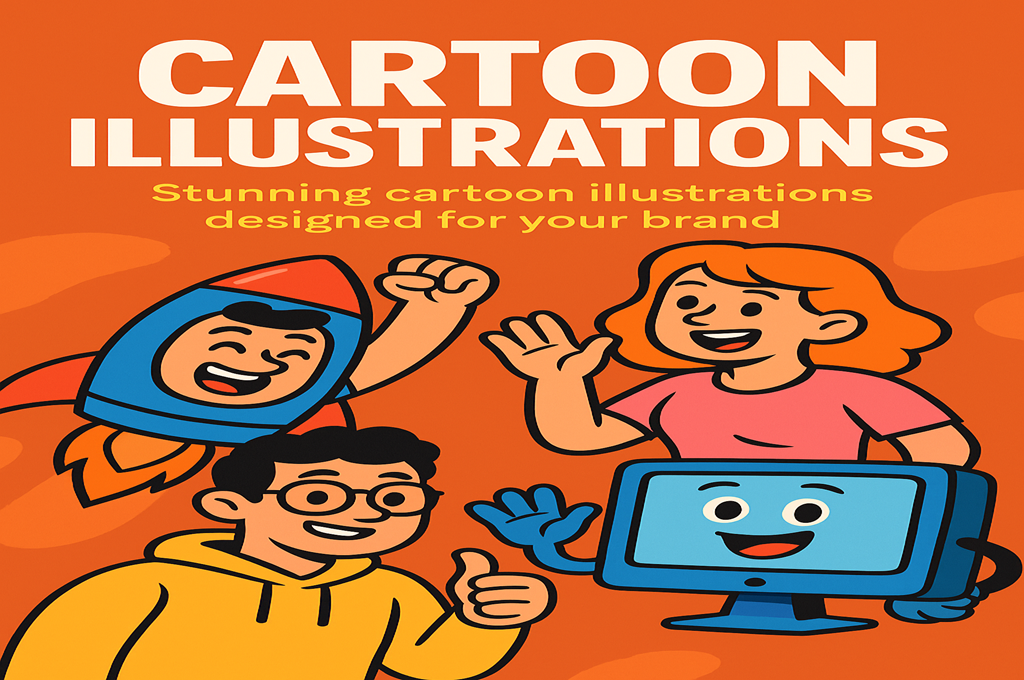
This complete guide explores the full landscape of cartoon illustrations, from foundational principles and artistic techniques to branding strategy, production workflows, and advanced implementation. You’ll learn how to create visual assets that resonate emotionally, scale seamlessly across platforms, and reinforce brand identity in ways that stock photos or basic graphics often cannot.
If you’re ready to transform your brand presence with visuals that are vibrant, expressive, and unforgettable, this guide will walk you through every stage of the journey.
Table of Contents
1. The Growing Power of Cartoon Illustrations in Modern Branding
1.1 Why Cartoon Illustrations Work Today
Modern audiences are bombarded with content. Thousands of ads, images, and posts flash before the average user’s eyes daily. The real challenge is not producing content—it’s creating content that stands out, sticks in memory, and builds emotional connection.
Cartoon illustrations excel because they:
- Capture attention faster than photos or text
- Create emotional responses through exaggerated expressions and stylization
- Simplify complex ideas into easy-to-understand visuals
- Seamlessly adapt across website, social media, video, and merchandise
- Strengthen brand personality through consistent visual identity
These attributes are backed by behavioral psychology research showing that humans process images faster than text and respond better to visuals with expressive facial cues. For additional insights on visual cognition, consult studies such as those summarized on Psychology Today (https://www.psychologytoday.com).
1.2 Why Brands Are Switching From Stock Photos to Custom Art
Stock images are generic. Even when appealing, they rarely express personality or uniqueness.
Cartoon illustrations solve this problem by:
- Offering complete originality
- Supporting custom characters that become brand mascots
- Delivering emotion on demand
- Being modifiable without legal restrictions
- Offering infinite stylistic flexibility
Industries using cartoon illustrations today include SaaS companies, startups, agencies, education platforms, coaching brands, e-commerce businesses, and personal brands.
2. Understanding Cartoon Illustrations: Styles, Techniques & Visual Language
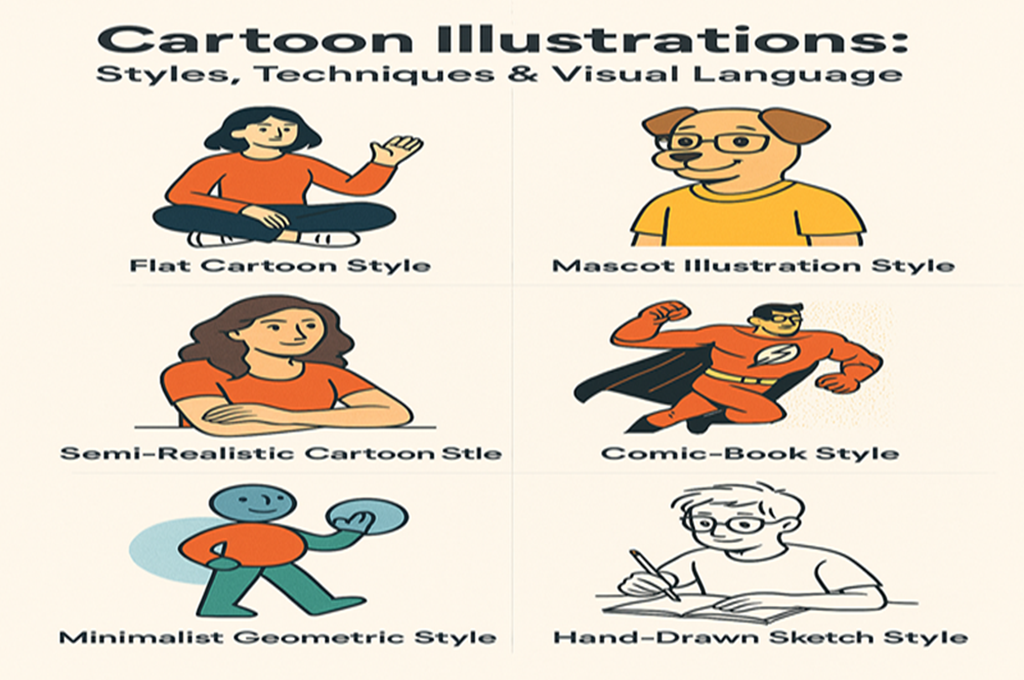
2.1 Major Styles of Cartoon Illustrations
There is no single “cartoon style”—the field includes dozens of artistic directions. Here are the most widely used in branding:
2.1.1 Flat Cartoon Style
Simple shapes, clean lines, and a modern aesthetic. Ideal for apps, tech brands, and infographics.
2.1.2 Mascot Illustration Style
Character-driven, expressive, and personality-centered. Best for memorable branding.
2.1.3 Semi-Realistic Cartoon Style
Combines realism with stylized features. Works well for premium brands and editorial visuals.
2.1.4 Comic-Book Style
Bold lines, strong shading, and dynamic action. Great for energetic or youthful audiences.
2.1.5 Minimalist Geometric Style
Shapes and symmetry create playful, abstract cartoon forms. Popular for tech and corporate environments.
2.1.6 Hand-Drawn Sketch Style
A raw, human visual texture. Often used for educational content or warm personal brands.
3. The Psychology Behind Effective Cartoon Illustrations
Visual storytelling works best when aligned with human behavioral tendencies. Great cartoon illustrations use:
3.1 Exaggerated Expressions
Amplified emotions enhance clarity and engagement. Overstated smiles, surprise reactions, and energetic body positions guide viewer interpretation.
3.2 Color Psychology
Colors influence perception and mood. For deeper study, explore Interaction Design Foundation’s color psychology resources (https://www.interaction-design.org).
Key color associations:
- Blue: trust and professionalism
- Yellow: cheerfulness and optimism
- Red: urgency and passion
- Green: growth and harmony
- Purple: creativity and luxury
3.3 Shape Language
Every shape communicates something:
- Circles: friendliness, softness
- Squares: stability and reliability
- Triangles: energy, direction, or tension
Great illustrators intentionally apply shape theory to strengthen brand consistency.
4. How Cartoon Illustrations Strengthen Brand Identity
4.1 Visual Consistency Builds Trust
A consistent illustration style across all brand touchpoints enhances recognition. Customers begin to associate your cartoon characters, color palettes, and background styling with your identity.
4.2 Mascot Characters Create Emotional Connection
Brand mascots function as ambassadors—warm, relatable, and memorable.
Mascots improve:
- Brand recall
- Emotional connection
- User engagement
- Conversion rates
This is why companies like Duolingo, Mailchimp, and Kellogg’s rely on character-driven branding.
4.3 Cartoon Illustrations Boost Social Media Performance
Illustrated posts frequently outperform text-heavy or photo-heavy posts due to:
- Increased shareability
- Higher aesthetic uniqueness
- Easier communication of abstract concepts
Social algorithms often favor content that sparks emotional reactions—precisely what cartoon visuals are built to do.
5. Planning Your Cartoon Illustration Strategy
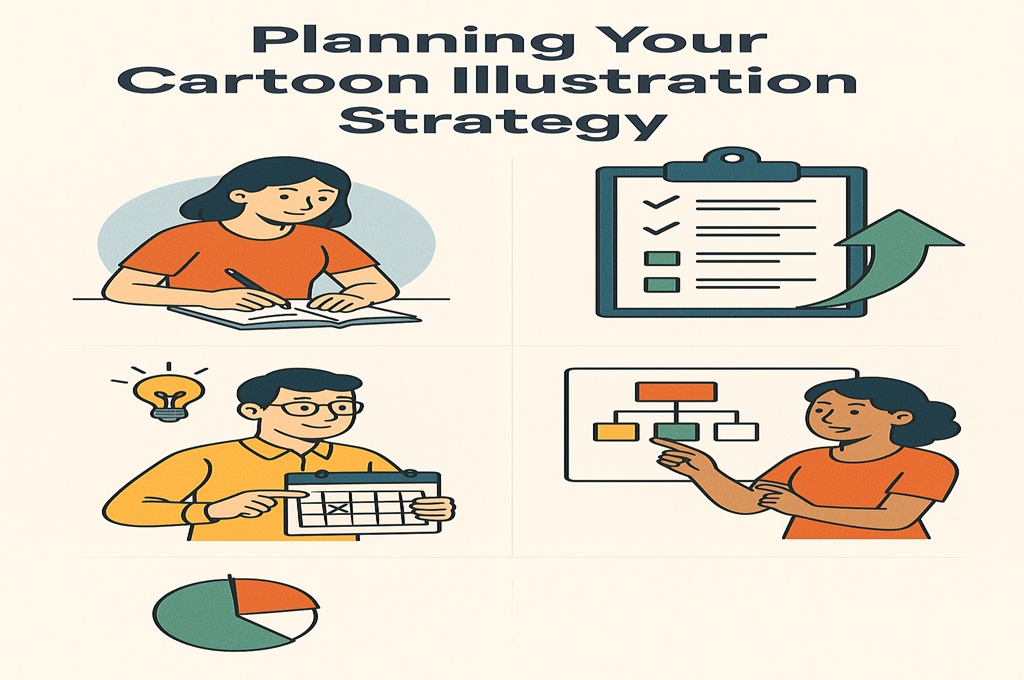
Before drawing or outsourcing, define foundational elements.
5.1 Determine Your Brand Personality
Is your brand:
- Playful?
- Bold?
- Minimalist?
- Premium?
- Youthful?
- Professional?
Your cartoon illustration style must align with this.
5.2 Identify Your Target Audience
Understanding demographics and psychographics helps tailor:
- Character expressions
- Color palettes
- Humor level
- Complexity
Example: A fintech brand might choose clean vector characters, while a coaching brand may prefer expressive, friendly hand-drawn illustrations.
5.3 Define the Purpose of Each Illustration
Ask:
- Is this for branding?
- Education?
- Marketing?
- Product UI/UX?
- Advertising?
- Packaging?
Purpose determines composition, style, and detail level.
6. Essential Components of a Powerful Cartoon Illustration
6.1 Strong Silhouette
A good cartoon character is recognizable even in shadow. This is crucial for mascot design.
6.2 Expressive Eyes and Body Language
Humans read emotion through eyes and posture. Cartoon illustrations amplify this effect.
6.3 Balanced Composition
Great composition directs viewer focus. Use visual hierarchy, contrast, and spacing intentionally.
6.4 Clean, Consistent Line Work
Whether thick, thin, textured, or geometric, line style should be uniform across your brand.
6.5 Intentional Use of Color and Shading
Choose harmonious color palettes. Simplify shading for clarity.
7. Tools and Software You Can Use to Create Cartoon Illustrations
7.1 Professional Illustration Tools
- Adobe Illustrator – Industry-standard vector tool
- Adobe Photoshop – Ideal for painted cartoon styles
- Procreate – iPad favorite for illustrators
- Affinity Designer – Affordable alternative to Illustrator
7.2 Beginner-Friendly Tools
- Canva – Pre-made cartoon assets for simple branding
- Figma – Great for UX/UI and simple vector illustrations
- Krita – Free drawing software
8. Step-by-Step Process for Creating Cartoon Illustrations
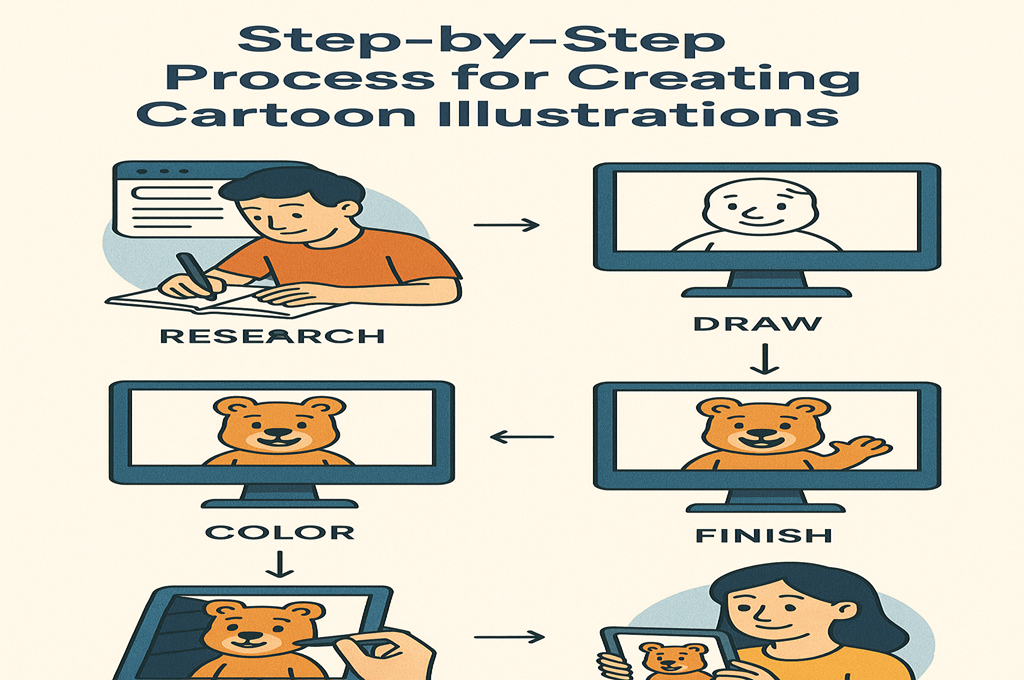
8.1 Step 1: Concept Development
Sketch ideas, brainstorm personality traits, explore shapes, and create mood boards.
8.2 Step 2: Thumbnail Sketching
Create small, quick sketches to plan poses and compositions.
8.3 Step 3: Clean Line Art
Refine sketch lines into clean, polished outlines.
8.4 Step 4: Flat Colors
Apply basic colors that match your brand palette.
8.5 Step 5: Shading & Highlights
Add dimension with simple shadows and highlights.
8.6 Step 6: Final Adjustments
Balance contrast, refine edges, and export in the correct formats.
9. Outsourcing vs. DIY: Choosing the Right Approach
9.1 When DIY Is Best
- You want full control
- Your budget is limited
- You have design experience
9.2 When Outsourcing Is Better
- You need a polished, professional look
- You require a full brand mascot system
- You need illustrations delivered at scale
Recommended Outsourcing Resource
To get professional-quality cartoon illustrations, you can explore this recommended service:
👉https://topratedaffi.com/recommends/cartoon-illustrations/
10. Using Cartoon Illustrations Across Your Brand Ecosystem
10.1 Websites
Cartoon illustrations can elevate hero sections, landing pages, explainer pages, and CTAs.
10.2 Social Media
Use cartoons for:
- Storytelling
- Announcements
- Educational content
- Animated reels
10.3 Ads & Email Marketing
Cartoon characters can increase click-through rates.
10.4 Product Packaging
Unique cartoon illustrations help products stand out on shelves.
10.5 Videos and Motion Graphics
Motion-animated cartoon illustrations bring stories to life.
11. Creating an Illustration-Powered Brand Mascot
11.1 Defining Mascot Personality
Consider traits, tone, and purpose.
11.2 Designing Multiple Expressions
Mascots need emotion sets for:
- Happy
- Curious
- Excited
- Surprised
- Thinking
11.3 Creating Poses & Action Scenes
A mascot should be flexible enough to appear in:
- Tutorials
- Ads
- UI elements
- Social posts
11.4 Mascot Brand Guidelines
Include:
- Style rules
- Color palettes
- Do’s & Don’ts
- File formats
12. Advanced Tips for Stunning Cartoon Illustrations
12.1 Use Visual Metaphors
Metaphorical symbolism makes messaging more memorable.
12.2 Reinforce Depth with Layer Separation
Foreground, midground, and background create clarity.
12.3 Use Textures and Brushes Wisely
Textures can make illustrations more tactile and emotional.
12.4 Maintain Scalability
Vector art ensures crisp quality at any size.
13. SEO Optimization with Cartoon Illustrations
Cartoon illustrations can boost SEO through:
- Improved dwell time
- Increased engagement
- Lower bounce rates
- Enhanced brand recognition
Include:
- Alt tags
- Descriptive filenames
- Image compression
- Schema markup where applicable
For more SEO best practices, see Search Engine Journal (https://www.searchenginejournal.com).
14. Monetizing Cartoon Illustrations
14.1 Selling Digital Art Packs
Sell character packs, icons, or backgrounds.
14.2 Offering Custom Illustration Services
Freelance or agency models.
14.3 Selling Print-on-Demand Products
T-shirts, stickers, mugs, posters.
Affiliate Recommendation
To get high-quality illustration resources:
👉 https://topratedaffi.com/recommends/Cartoon-Illustrations /
15. Common Mistakes to Avoid
- Overcomplicating the artwork
- Using inconsistent proportions
- Ignoring brand color rules
- Using too many different styles across assets
- Poor file export settings
16. Cartoon Illustration Case Studies
16.1 SaaS Platforms
Using characters for onboarding and tutorials increases completion rates.
16.2 E-Commerce Brands
Custom cartoon product icons increase buyer trust.
16.3 Education Platforms
Cartoon illustrations improve user comprehension and engagement.
16.4 Influencers & Personal Brands
Cartoon avatars strengthen personal identity.
17. How to Maintain a Consistent Illustration Style
- Create a brand illustration guide
- Use the same brushes
- Maintain consistent eye shapes and proportions
- Standardize shading
- Reuse color palettes and line styles
18. Animation and Cartoon Illustration
18.1 Simple Motion Effects
Wiggle, bounce, fade, squish-and-stretch.
18.2 Full Character Animation
More complex, but highly engaging for social media and ads.
19. The Future of Cartoon Illustrations
Expect trends like:
- 3D cartoon graphics
- AI-assisted sketching
- Hyper-minimalist mascot systems
- Inclusive character ecosystems
- Interactive illustrated websites
20. Final Thoughts and Next Steps
Cartoon illustrations are more than artwork—they are branding tools with emotional, strategic, and commercial value. Whether used for ads, websites, education, or social media, stunning illustrations can define your brand identity, deepen audience loyalty, and boost conversion rates.
If you’re ready to upgrade your brand visuals, start with this trusted resource:
https://topratedaffi.com/recommends/Cartoon-Illustrations /
Author Bio
Mamduha AL Lashirah is a visual branding specialist, illustrator, and content strategist with over a decade of experience helping brands communicate through memorable, story-driven artwork. Passionate about design psychology, digital storytelling, and user-focused branding, they create resources that empower businesses to elevate their impact through thoughtful and engaging visuals.
👉 Recommended Resource for Stunning Cartoon Illustrations:
https://topratedaffi.com/recommends/Cartoon-Illustrations /